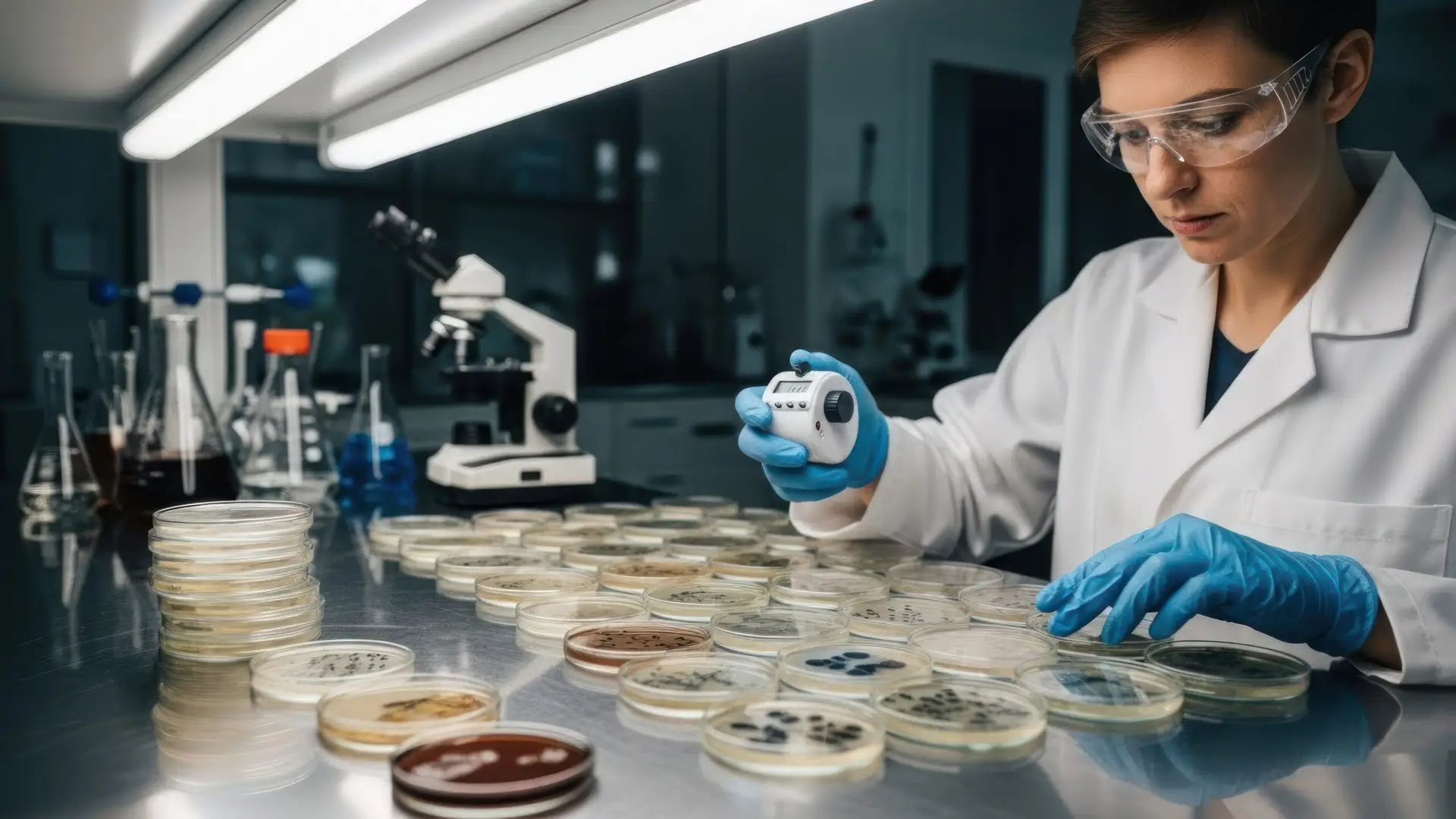
Queens has more housing diversity than any other New York City borough. From prewar walk-ups in Astoria and two-family brick homes in Woodside to detached houses in Bayside and Douglaston, postwar co-ops in Rego Park, row houses in Ridgewood, and modern high-rises in Long Island City, every property has a unique plumbing system that can affect water quality differently. Because each building type presents its own set of challenges, experienced water testing companies Queens can identify hidden contaminants and evaluate overall water safety. This guide explores the most common water quality issues found in Queens homes, explains why they occur, and highlights the difference between visible warning signs and contaminants that can only be detected through professional laboratory testing.
The Same Supply, Different Outcomes
Every Queens home draws from the same source. New York City delivers water from protected upstate reservoirs, treats and disinfects it, and pushes it through mains that meet every federal and state standard.
What happens next depends entirely on the property. The service line, the interior pipes, the water heater, the storage tank if there is one, and the fixtures at the sink all belong to the building. City oversight ends where private plumbing begins, and Queens plumbing is old, varied, and largely undocumented.
This means that two homes on the same block, drawing from the same main, can produce measurably different water. The supply is a constant. The property is the variable.
Challenge One: Lead From Pre-1986 Plumbing
This is the most serious challenge in Queens, and the one homeowners are least equipped to notice.
Before 1986, lead solder, lead service lines, and lead-bearing brass fixtures were legal and standard. Vast portions of the borough date from that era. The original plumbing installed in those decades is, in many homes, still carrying water today.
Lead in water is colorless, odorless, and tasteless. A home with a serious lead problem produces water that looks crystalline, tastes clean, and smells of nothing. A family can drink it daily for a decade while everything appears completely normal.
Lead leaches most aggressively when water sits motionless in the pipes overnight, and when hot water passes through them. Health authorities recognize no safe level of exposure. The harm falls hardest on infants, young children, and pregnant residents, affecting brain development and learning in ways that do not reverse.
No sensory check detects it. No visual inspection rules it out. This is the defining fact of water quality in Queens, and everything else in this guide sits beneath it.
Challenge Two: Shared Plumbing in Two-Family Homes
Queens is a borough of two-family houses, and those houses create risks that detached homes do not.
One service line feeds both units. One water heater frequently serves both households. Risers and branch lines interconnect in ways that decades of conversions and improvised repairs have made difficult to trace. A problem in the shared infrastructure reaches both families at once.
The specific hazard most owners overlook is stagnation in the underused unit. When an apartment sits vacant between tenants, water stands motionless in its lines for weeks. Chlorine dissipates. Bacteria establish. Metals leach into water with nowhere to go. Because the two units share risers and junctions, that degraded water can migrate into the system serving the occupied unit.
Testing one unit and generalizing to the other is a mistake. The two apartments run through different final pipe runs, different fixtures, and different usage patterns. Both need testing.
Challenge Three: Rising Groundwater in Southeast Queens
Across Jamaica, St. Albans, Hollis, Springfield Gardens, Laurelton, Cambria Heights, and Rosedale, homeowners face a problem rooted in hydrology rather than plumbing.
Private water companies once pumped the local aquifer heavily, keeping the water table well below basement level. That pumping ended in the 1990s when the area shifted to the city supply. The aquifer recovered, and the water table climbed. Basements dug during the era of low groundwater now sit at or below saturated soil.
The water quality consequences run deeper than a wet basement:
- Buried service lines sit in saturated, corrosive soil, which accelerates their deterioration.
- Where a compromised pipe meets a drop in internal pressure, contaminated groundwater can be drawn into the supply.
- Combined sewer backups during heavy storms can introduce sanitary sewage carrying bacteria and viruses.
- Groundwater itself carries road salt, petroleum residue, fertilizers, pesticides, and heavy metals picked up from a century of urban development.
Any Southeast Queens home with a recurring flooding problem should be testing its drinking water, not just pumping its basement.
Challenge Four: Mixed Pipe Materials From Decades of Patching
Almost no Queens home has been fully replumbed. It has been repaired, again and again, by different owners with different budgets and different plumbers.
A copper section replaced after a leak. A galvanized steel run nobody touched. PEX added during a bathroom remodel. The result is a system of dissimilar metals joined at dozens of points, and dissimilar metals in contact corrode each other through galvanic action. Every junction becomes a site where particles enter the water.
This challenge compounds the others. Corroding joints release iron and copper, and where lead solder sits at those joints, they release lead too.
Challenge Five: Rooftop Tanks in Taller Buildings
Apartment buildings above roughly six stories, common in Long Island City, Flushing, Forest Hills, and Rego Park, rely on rooftop storage tanks. City water gets pumped up, stored, and delivered by gravity to the units below.
City law requires annual cleaning and testing. Enforcement depends on owners following through, and owners do not always follow through. Management companies change. Records disappear. A tank sits uncleaned while sediment accumulates at the bottom and warm summer water encourages bacterial growth. Everything stored in that tank flows directly to the apartments beneath it.
An owner who skips a modest annual legal requirement is telling you something about how the rest of the building is maintained.
Challenge Six: Aging Water Heaters
Sediment settles in the tank over years of use. The anode rod, which sacrifices itself to protect the tank from corrosion, eventually depletes, and the tank begins corroding into the water. Insufficient temperature settings can allow bacteria, including Legionella, to establish inside.
In a two-family home with a shared heater, one neglected tank affects both households.
Challenge Seven: Water Chemistry and Corrosion
pH and mineral content determine how aggressively water attacks the pipes it passes through. Corrosive water pulls more lead and copper into solution and accelerates the breakdown of every metal component in the system.
This is not a contaminant in itself. It is the engine that drives most of the others.
The Signals You Can Detect, and the One You Cannot
Signs Worth Acting On
- Brown or rust-colored water, especially on the first draw of the morning, indicating corroding iron or galvanized steel.
- A metallic or bitter taste, pointing to dissolved metals.
- Musty, earthy, or sulfurous odors, suggesting bacterial activity or a deteriorating water heater.
- Cloudiness that lingers rather than clearing within seconds.
- Grit or flakes in faucet aerators, which you can check by unscrewing the tip of the tap.
- Orange or blue-green staining in sinks and tubs, indicating iron or copper.
- Falling water pressure, which reflects scale narrowing the interior of the pipes.
The Exception That Overrides the List
Lead produces none of these signs. The complete absence of every warning above tells you nothing about whether lead is in your water. A homeowner who waits for a visible signal before testing is waiting for something that will never arrive, while the exposure continues daily.
What Professional Analysis Measures
A certified laboratory screens your water against Environmental Protection Agency and New York State standards:
- Lead and copper, using a first-draw sample collected after water has sat overnight, when levels peak, paired with a flushed sample taken after the tap has run. Comparing the two reveals whether contamination originates in your fixtures or upstream in the service line, which determines what needs replacing.
- Coliform bacteria and E. coli, the standard indicators of biological contamination, especially relevant after flooding or in homes with stagnant lines.
- Iron and manganese, which quantify how far pipe corrosion has advanced.
- pH, chlorine residual, and total dissolved solids, which describe how corrosive and how well-disinfected the water remains.
- Turbidity and sediment, which confirm the condition of the plumbing.
Drugstore test strips cannot approach this precision. Lead matters at concentrations orders of magnitude below what a color-changing strip can resolve, and a strip reading “negative” often means only “below my detection limit.”
Steps Queens Homeowners Can Take Today
- Flush your cold tap for thirty seconds to two minutes before drinking or cooking, especially in the morning or after time away.
- Never use hot tap water for drinking, cooking, or baby formula. Heat accelerates lead leaching sharply.
- Clean your aerators every few months to remove trapped sediment and lead particles.
- Flush vacant units and unused bathrooms weekly to prevent stagnation.
- Drain your water heater annually and check the anode rod periodically.
- Test after any basement flooding, sewer backup, or nearby street work.
- Test at your own tap, because a city distribution reading and a neighbor’s result both describe something other than the water your family drinks.
Frequently Asked Questions
Why does water quality vary between homes on the same Queens block?
Every home draws from the same city main but delivers water through its own service line, pipes, water heater, and fixtures. Age, material, renovation history, and usage patterns all differ, and each of those factors changes the water. The supply is identical; the plumbing is not.
My water looks and tastes fine. Is it safe?
Not necessarily. Lead is colorless, odorless, and tasteless, so water that looks and tastes perfect can still contain unsafe levels. If your home was built before 1986 and has never been tested at the tap, sensory quality gives you no information about the most serious risk.
Why does a vacant unit in my two-family home matter?
Water standing motionless in an empty unit’s pipes loses its chlorine residual, grows bacteria, and absorbs metals. Because the two units share risers and junctions, that degraded water can migrate into the system serving the occupied unit. Flushing vacant taps weekly reduces the risk substantially.
Does basement flooding really affect drinking water?
Yes. Buried service lines sit in the same saturated soil, and corrosive groundwater accelerates their deterioration. Where a compromised pipe meets a drop in internal water pressure, contaminated groundwater can enter the supply. Sewer backups add bacteria and viruses to the mix. Testing after flooding is a sensible standing practice in Southeast Queens.
How often should a Queens home be tested?
Test whenever a triggering condition appears: a change in taste, color, or odor, a flooding event, nearby street work, a period of vacancy, a home purchase, or a new baby. Homes with pre-1986 plumbing benefit from periodic testing regardless, since pipes continue to corrode and today’s clean result does not guarantee next year’s.
What do I do if a test finds a problem?
Switch to filtered or bottled water for drinking and cooking immediately. Use the report to identify the source, then have a plumber replace the responsible component. If you rent, deliver the certified results to your building owner in writing with a request for remediation and follow-up testing, and file a complaint with the New York City Department of Health and Mental Hygiene if they do not act.