For decades, the convenience of turning on a kitchen faucet was met with a sense of implicit trust. On Long Island, our water comes from a complex system of underground aquifers massive natural reservoirs that have sustained Nassau and Suffolk counties for generations. However, the narrative around our tap water is shifting.
Today, Long Island families are no longer content with “good enough.” From the Gold Coast of the North Shore to the bustling neighborhoods of central Nassau and the sprawling estates of the East End, residents are asking deeper, more informed questions about what is actually coming out of their taps. This isn’t just about curiosity; it’s about a fundamental shift toward health literacy and environmental stewardship.
The Shift in Perspective: From Utility to Health
In the past, the primary concern regarding water was usually its availability or perhaps its mineral content the “hard water” that leaves spots on glasses. But as news cycles have become dominated by reports of emerging contaminants like 1,4-dioxane and PFAS (per- and polyfluoroalkyl substances), the conversation has turned toward long-term health.
Families are beginning to realize that “compliant with federal standards” doesn’t always mean “free of risk.” While local municipalities work tirelessly to meet EPA and Department of Health guidelines, the lag between scientific discovery and regulatory enforcement can leave a gap. This is why Long Island water issues have become a frequent topic at school board meetings and community gatherings.
The Questions That Matter
When homeowners reach out to professionals today, they aren’t just asking about the price of a filter. They are asking specific, technical, and localized questions. Here are some of the inquiries that define this new era of water awareness:
1. “What is the age of the infrastructure in my specific neighborhood?”
Long Island is a patchwork of historic villages and mid-century suburban developments. Families are recognizing that while the water leaving a treatment plant might be pristine, the journey through aging lead pipes or copper pipes with lead solder can change the water chemistry before it reaches the glass. People are looking at their property types whether it’s a century-old Victorian in Huntington or a 1950s Levittown ranch and questioning how the home’s own “plumbing history” impacts safety.
2. “Are we testing for ‘Forever Chemicals’?”
The term “PFAS” has moved from scientific journals into the common vernacular of the Long Island parent. These chemicals, used for decades in firefighting foams and non-stick products, are notoriously difficult to break down. Families are now asking for water testing services that specifically target these synthetic compounds, rather than just the standard bacteria and chlorine checks.
3. “How does our local geography impact our well?”
For those in more rural parts of Suffolk County or certain North Shore pockets, private wells are common. These families are asking how nearby agricultural runoff or industrial legacy sites might be migrating through the sandy soil. They are looking at locations across the Island and realizing that water quality is a hyper-local issue.
Shutterstock
Explore
Why Transparency is the New Gold Standard
The rise of the “better question” is largely driven by a demand for transparency. The Environmental Working Group (EWG) has provided a platform for citizens to look up their local utilities, often revealing contaminants that exceed health guidelines even if they remain within legal limits.
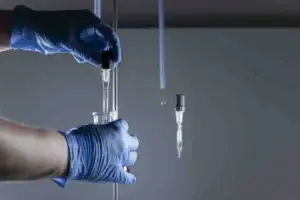
This transparency has led to a surge in interest regarding professional diagnostics. Families are no longer satisfied with the “strip tests” found at big-box hardware stores. They want laboratory-grade analysis. They want to know the “why” behind the numbers. This is a common theme explored in our blog, where we break down the complexities of local water chemistry into actionable information.
The Role of Education and Professional Testing
As families become more educated, they discover that water quality is dynamic. It changes with the seasons, with local construction, and with the shifting of the water table. This realization has turned water testing from a “one-time event” during a home purchase into a regular part of home maintenance.
Many residents find themselves visiting a FAQ page not just to solve a problem, but to prevent one. They are learning about the difference between “aesthetic” issues (like the smell of sulfur or chlorine) and “health-based” issues (like nitrates or VOCs).
The New York State Department of Health provides extensive resources on public water systems, but for the individual homeowner, the responsibility often lands on their own shoulders to ensure the final point of delivery the faucet is safe.
Moving Toward a Proactive Future
The fact that Long Islanders are asking better questions is a win for public health. When a community is informed, it can advocate for better filtration technology at the municipal level and make better choices for the home.
Whether it’s installing a reverse osmosis system, a whole-house carbon filter, or simply deciding to test the water annually, these actions are born from the same place: a desire to protect the next generation. We are seeing a move away from the “ignorance is bliss” mentality toward a “knowledge is power” approach.
If you have started noticing changes in your water perhaps a slight discoloration after a heavy rain, or a metallic tang or if you simply want the peace of mind that comes with data, it’s time to seek out Olympian Water Testing of Long Island. Our mission is to provide the answers to those “better questions” you are asking.
The journey to cleaner water starts with a conversation. We invite you to contact us to discuss the specific needs of your household and neighborhood.
Conclusion: A Community Effort
Protecting Long Island’s water is a collective effort. It involves government oversight, environmental advocacy from groups like the Nature Conservancy, and, most importantly, the vigilance of the families who live here.
By asking the hard questions, Long Islanders are ensuring that our unique aquifer system remains a viable, healthy resource for decades to come. Don’t just settle for what’s in the pipes understand it, test it, and take control of your family’s most essential resource.