Water testing laboratories Queens provide the critical insight needed to identify water contaminants that are completely invisible to the naked eye. The most dangerous thing about contaminated drinking water is how ordinary it looks; a glass of water carrying enough lead to permanently affect a child’s development appears identical to a glass of water carrying none. There is no cloudiness, no color, no taste, and no smell to warn you. Human senses evolved to detect rot and spoilage, not dissolved metals measured in parts per billion. Professional water analysis exists to close that gap, as it is the only tool that can truly detect these hidden risks. This guide explains how laboratory analysis works, what it detects that you never could, and why the contaminants worth fearing are precisely the ones you will never notice.
The Fundamental Problem With Trusting Your Senses
People judge water the way they judge food. They look at it, smell it, taste it, and draw a conclusion. That instinct works reasonably well for spoiled milk. It fails completely for drinking water.
The reason is a matter of scale. Contaminants that damage human health operate at concentrations far below the threshold of human perception. Lead becomes a health concern at levels measured in parts per billion, a dilution so extreme that no taste bud, no nose, and no eye can register it. You are not being careless when you fail to detect it. You are being human.
Worse, the sensory signals people do notice often point at the least dangerous problems. Chlorine taste is noticeable and largely harmless. Hard water leaves visible spots and threatens nothing. Meanwhile lead, arsenic, and certain bacteria give no signal whatsoever. Your senses are actively misleading, drawing your attention toward nuisances while the real hazards pass unremarked.
What Counts as a Hidden Contaminant
Lead
Lead is the archetype of the hidden contaminant. Colorless, odorless, tasteless, and dangerous at concentrations no human sense can approach. It leaches from lead solder, lead service lines, and lead-bearing brass fixtures, all standard in construction before 1986.
Health authorities recognize no safe level. It accumulates in the body and does its worst damage to infants, young children, and pregnant residents, affecting brain development, learning capacity, and behavior in ways that do not reverse. A household can consume it daily for years while everything appears completely normal.
Copper
Copper sometimes announces itself through a metallic taste or blue-green staining, but often it does not. At levels below sensory detection, it still causes gastrointestinal distress and, over prolonged exposure, liver and kidney damage.
Coliform Bacteria and E. coli
Bacterial contamination is invisible by definition. Water carrying pathogenic organisms looks perfectly clear. Coliform bacteria serve as the standard indicator that something has breached the system, whether a corroded pipe, a compromised storage tank, or a cross-connection. By the time illness reveals the problem, the household has already been drinking it.
Arsenic and Other Trace Metals
Arsenic is odorless and tasteless in water. It causes cancer and cardiovascular damage over long exposure, and it can enter supplies through geology or industrial contamination. Nobody has ever detected it by drinking a glass.
Nitrates
Nitrates from fertilizer, septic systems, and industrial sources dissolve invisibly. In infants, high nitrate levels interfere with the blood’s ability to carry oxygen, a condition that can be fatal and gives no advance warning in the water itself.
Volatile Organic Compounds and Solvents
Industrial chemicals migrating through soil into groundwater and service lines produce no reliable sensory signal at concentrations that still matter for health. Their effects accumulate quietly across years.
Disinfection Byproducts
Chlorine keeps water safe during distribution but reacts with organic matter to form compounds associated with long-term health risks. Their levels vary based on how long water sits in storage, and they are undetectable at the tap.
How Water Analysis Actually Works
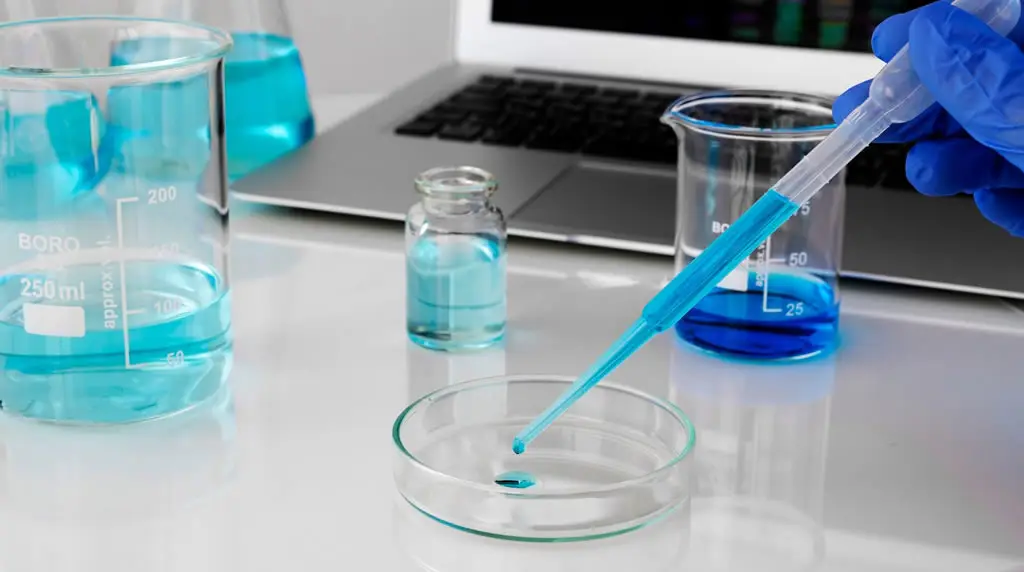
Laboratory analysis converts a glass of water into a set of numbers. That transformation happens in stages, and each stage is designed to eliminate a way the result could be wrong.
Stage One: Controlled Sample Collection
This is the step people underestimate, and it determines everything downstream. A contaminated container, a rinsed bottle, a sample collected at the wrong moment, or one that sat too long before analysis produces a number that means nothing.
Technicians use sterile, contaminant-free containers and follow strict protocols. For lead, they typically collect a first-draw sample, taken after water has sat motionless in the pipes for hours, which captures the peak concentration. They pair it with a flushed sample, collected after the tap has run. The difference between the two is diagnostic: a high first draw with a clean flush points to your own fixtures and branch line, while elevated readings in both point upstream to the service line or the building’s shared plumbing.
Samples are then preserved, labeled, and transported under documented chain-of-custody procedures so the water reaching the lab is chemically identical to the water that left the tap.
Stage Two: Instrumental Analysis
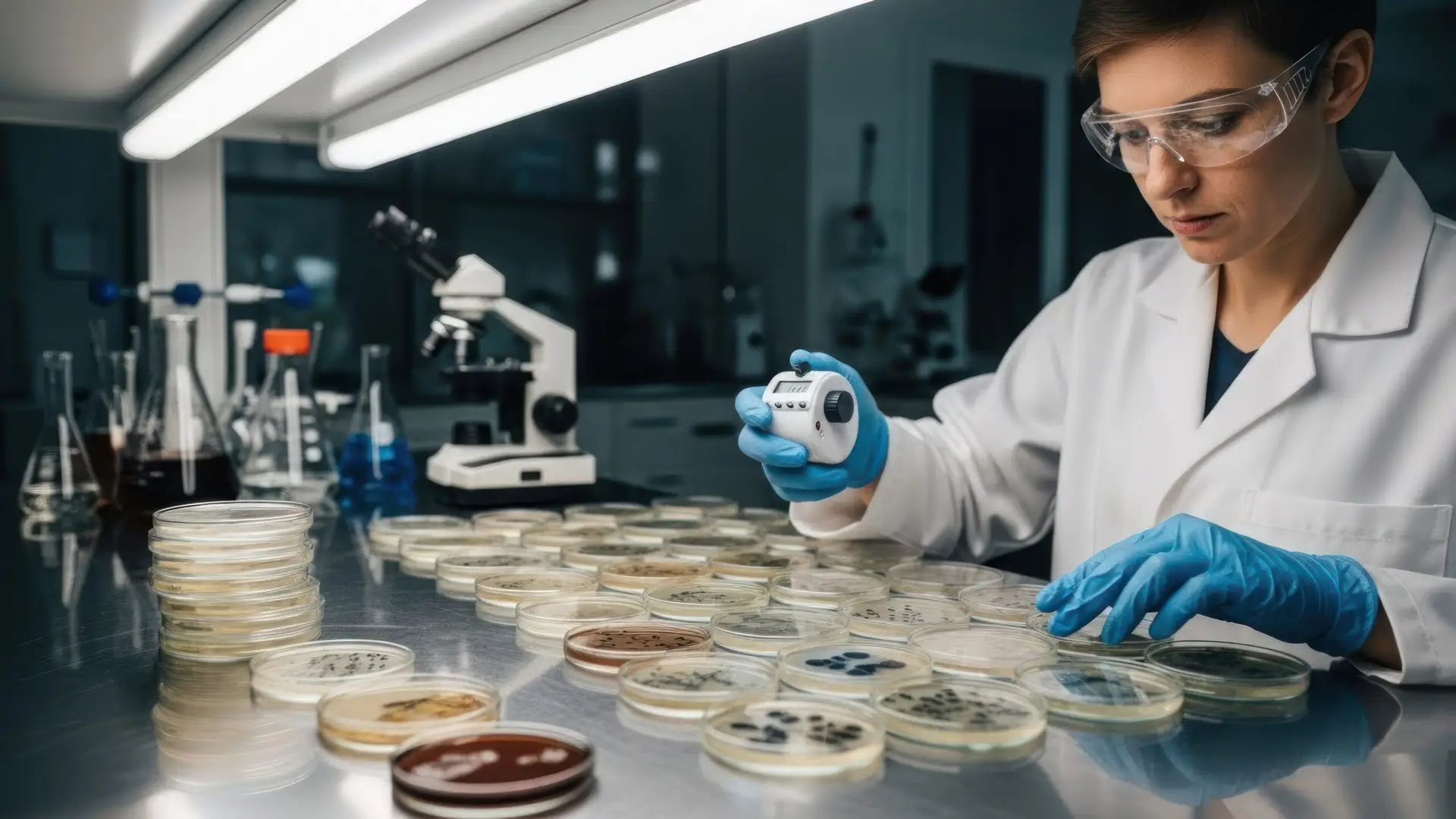
In the laboratory, instruments detect what no sense can. Different contaminants require different methods.
Metals such as lead, copper, iron, arsenic, and manganese are measured using techniques that can identify individual elements at parts-per-billion concentrations, far below any perceptible threshold.
Bacteria are detected through cultured incubation or molecular methods that reveal whether coliform organisms or E. coli are present, and in what quantity.
Chemical parameters including pH, chlorine residual, turbidity, and total dissolved solids are measured with calibrated instruments that describe the water’s stability, corrosiveness, and disinfection status.
Organic compounds require specialized separation and detection methods capable of identifying specific molecules in a complex mixture.
Stage Three: Comparison Against Standards
A raw number means little on its own. The laboratory compares every result against Environmental Protection Agency and state regulatory thresholds, converting a measurement into a verdict: within safe limits, or not.
Stage Four: Interpretation
The most valuable output is not the number but the explanation. A good report tells you what the results mean, which component of your plumbing is the likely source, and what action the findings call for. High lead with low iron suggests solder and fixtures. High bacteria with normal metals points at a storage tank. Elevated readings across the board suggest a system that has been neglected for a long time.
Why Home Test Kits Cannot Substitute
Drugstore strips and countertop testers have a place. They can flag something dramatic, and they cost almost nothing. They cannot do the job that matters.
- Insufficient sensitivity. Lead is dangerous at concentrations orders of magnitude below what a color-changing strip can resolve. A strip that reads “negative” is often reading “below my detection limit,” which is not the same thing.
- No sample-handling protocol. Without controlled collection, preservation, and timing, the result describes an unknown sample rather than your water.
- No calibration. Laboratory instruments are calibrated against known standards. A strip is calibrated against a printed color chart.
- No documentation. If you need to compel a landlord, a co-op board, or a city agency to act, a laboratory report carries evidentiary weight. A photograph of a test strip does not.
- Narrow scope. Most kits screen for a handful of parameters. Comprehensive analysis covers metals, bacteria, chemistry, and organics together, which is how you find the thing you were not looking for.
What Analysis Reveals That You Would Otherwise Never Learn
The Source of the Problem, Not Just Its Presence
Paired first-draw and flushed sampling localizes contamination. That distinction determines the fix. Replacing a fixture is a small job. Replacing a service line is a major one. Guessing wrong means spending money while the problem persists.
Problems That Vary by Location
Water quality differs between apartments in one building, between units in a two-family house, and between floors of a high-rise. Different pipes, different fixtures, different usage patterns, different results. Point-of-use analysis measures what your household actually drinks rather than what the building averages.
Trends Over Time
Pipes corrode progressively. A test that came back clean five years ago describes plumbing that has aged since. Periodic analysis catches deterioration while it is still cheap to address.
The Effects of Events
Flooding, nearby street work, a main break, or a period of vacancy all change water quality in ways nothing visible reveals. Analysis after a triggering event tells you whether the disturbance reached your glass.
When to Analyze
- Any home built before 1986, where lead solder and lead-bearing fixtures were legal and standard.
- Any household with an infant, young child, or pregnant resident, for whom lead exposure carries permanent consequences.
- After basement flooding or a sewer backup, which can compromise buried service lines.
- After nearby excavation or main repair, which dislodges deposits and disturbs connections.
- After a period of vacancy, when water has been standing motionless in the pipes.
- When water changes in taste, color, odor, or clarity.
- When you have simply never tested, and therefore have no information at all about the water your family drinks daily.
Frequently Asked Questions
Why can’t I detect contaminants by taste or smell?
Health-relevant contaminants operate at concentrations measured in parts per billion, far below the threshold of human perception. Lead, arsenic, nitrates, and many bacteria produce no taste, odor, or visual change at levels that seriously affect health. Human senses evolved to detect spoilage, not dissolved metals.
What is the difference between a first-draw and a flushed sample?
A first-draw sample is collected after water has sat motionless in the pipes for hours, capturing peak metal concentrations. A flushed sample is taken after the tap has run for a period. Comparing the two shows whether contamination comes from your own fixtures and branch line or from the service line and shared plumbing upstream.
Are home test kits worth using?
They can flag an obvious problem and cost very little, but they lack the sensitivity to detect lead at health-relevant concentrations, lack controlled sample handling, and produce no documentation you can use to compel a repair. They are a rough screen, not an answer.
How does a laboratory detect bacteria in clear water?
Bacteria are invisible to the eye, so laboratories culture the sample under controlled conditions or use molecular methods to identify coliform organisms and E. coli. Their presence indicates that something has breached the water system, even when the water appears perfectly clean.
How often should water be analyzed?
Test whenever a triggering condition appears: a change in water quality, a flooding event, nearby construction, a period of vacancy, or the arrival of a new baby. Homes with pre-1986 plumbing benefit from periodic testing regardless, because pipes continue to corrode and today’s clean result does not guarantee tomorrow’s.
What happens if analysis finds a contaminant?
Switch to filtered or bottled water for drinking and cooking immediately. Use the report to identify the source, then address it: replacing fixtures, solder joints, or the service line depending on what the sampling revealed. If you rent, deliver the certified results to the building owner in writing with a request for remediation and follow-up testing.
See What Your Senses Cannot
Every protective habit helps. Flushing the tap, avoiding hot water for cooking, changing filter cartridges on schedule, cleaning aerators. All of it reduces exposure to a threat you have not measured. None of it tells you whether the threat is there.
Water analysis is the only instrument that sees what you cannot. It turns an invisible daily exposure into a number, compares that number to a standard, and gives you an answer you can act on with confidence.
Olympian Water Testing collects first-draw and flushed samples at your own tap using certified laboratory protocols, screens for lead, bacteria, metals, and the chemical contaminants that hide below the limits of human perception, and returns a clear report explaining what the findings mean and what to do next. Contact Olympian Water Testing today, schedule an analysis for your home, and stop relying on senses that were never built for the job.